IG Markets Limited
- Market
- United Kingdom
- Regulator
- FCA · licence 195355
- Loss rate
- 70% of retail CFD accounts lose money with this provider (as of 2026-11-04). Source
- Published terms
- Charges · Withdrawals
- Crypto CFDs
- No
Trading workspace
kaiser signal is a trading workspace for studying market depth, trading costs and risk. Four working tools turn the questions most people skip before placing an order into numbers you can see.
Registering is free and nothing is charged. A deposit is only needed if you open an account.
Leave your details and we will pass them to the executing broker for your country so it can contact you about an account. Registering is free and nothing is charged.
Opening an account will need a deposit from $250 AUD (or £250 GBP / €250 EUR / $250 CAD / $250 NZD / $250 SGD). It is your own money and it is at risk.
The workspace
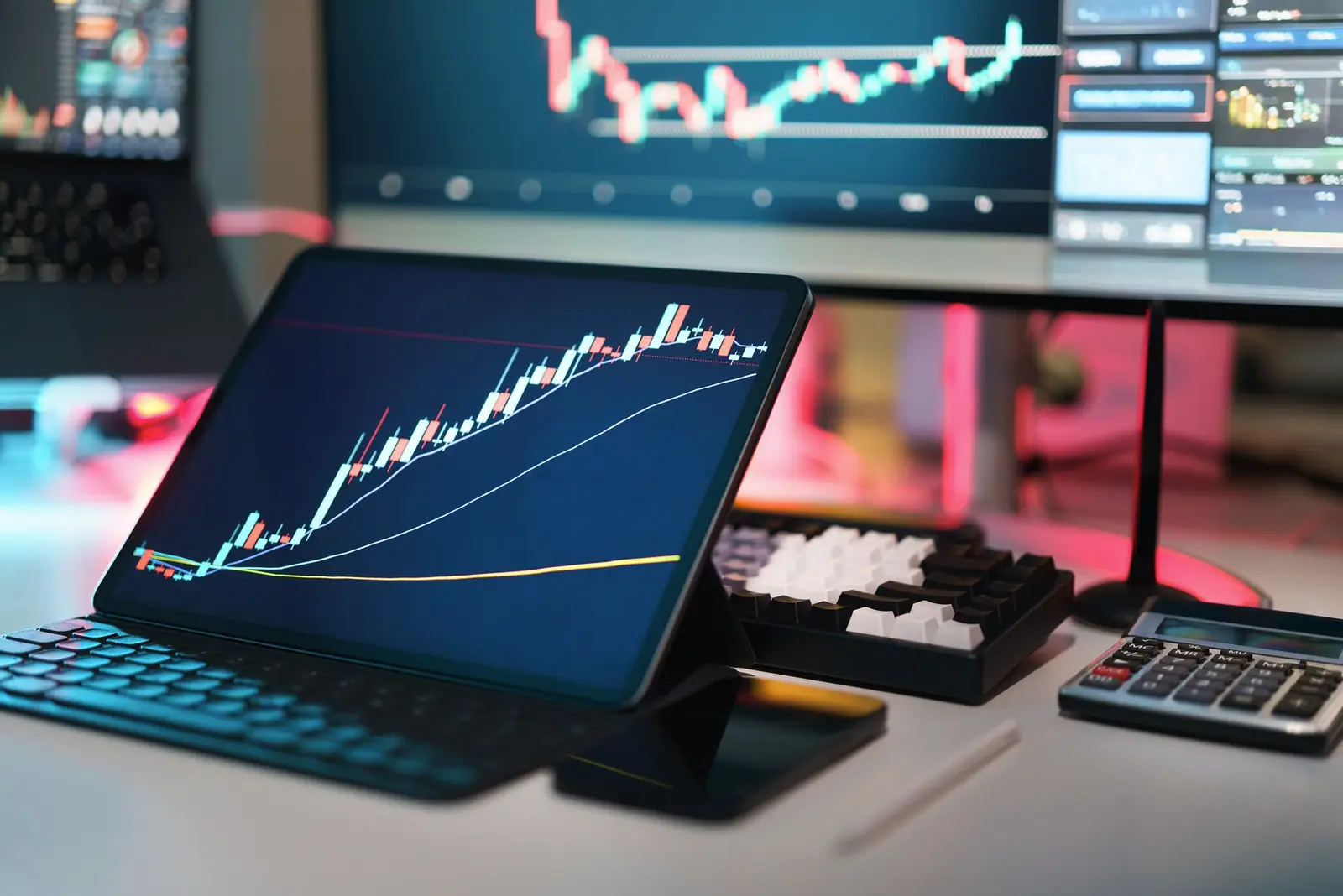
Candlesticks, an order book and three readouts: the average fill for a 20-unit order, the break-even move and the position size at 1% risk. Those three figures are what the tools return at their default inputs. The chart and the book are illustrative, not live data.
Why it exists
A market produces a continuous stream of prices, sizes and spreads. Most of it is routine. What matters for you is smaller and more personal: how deep the book is at the size you intend to trade, what the round trip will cost, and how much of your balance is on the line if you are wrong. Those three answers are rarely on the screen when the order button is.
kaiser signal is built around that gap. It does not try to tell you where a price is going. It gives you a place to look at the structure around a decision (depth, cost and risk) so that the decision is made with the arithmetic in front of you rather than in your head.
The name carries the idea. A tape is long and mostly uneventful; the signal is knowing which parts deserve your attention. Our tools are deliberately plain so that attention stays on the numbers.
What you get
A quoted price applies only to the quantity sitting at it. Larger orders consume the next level, then the next. The depth ladder explorer shows the average price you would pay across an example book, and how far that sits from the best price.
For example: an order of 20 units against the example book fills across three price levels, not one.
Spread, commission and other charges are paid whether an idea works or not. Enter the charges from your provider's schedule and the estimator returns the total cost of the round trip and the price move needed just to get back to even.
For example: a wider spread on a smaller expected move can leave very little room for being right.
Choose the share of your balance you are willing to put at risk, enter your entry and exit prices, and the risk ruler returns the largest position that keeps the loss at your exit inside that limit. The distance to your exit does the work; the size follows from it.
For example: a wider exit means a smaller position for the same amount at risk.
From the book to the fill
A single price hides a ladder. On one side are the quantities waiting to buy, on the other the quantities waiting to sell, and between the best of each sits the spread. Reading that ladder tells you how thin or thick the market is at the moment you want to act.
In the depth ladder explorer you choose a side and a size. The explorer works through an invented example book level by level and reports the average fill, the price impact against the best price and whether the book was exhausted. It is a small piece of arithmetic, and it makes visible something that is otherwise easy to underestimate: size has a price.
The same habit carries over to real markets. Before you trade a quantity, ask what is waiting at each level and what the average would be if you took it all.
Know the cost before the idea
Price movement is uncertain. Costs are not. A spread is crossed on entry, commission is charged on the way in and out, and other charges accumulate with time or size. Added together they set a threshold: the move your idea needs to make before it has earned anything.
The round-trip cost estimator asks for the handful of figures that decide that threshold and returns the total and the break-even move in price units. Because you enter the figures, it works with whatever schedule your provider publishes. We do not supply or assume any rates.
Seeing the break-even move beside your expected target is a quick way to test whether the idea is large enough to be worth the cost of expressing it.
With a value of 1.00 per price unit, no commission and no other charges, the spread alone costs 20.00, and the price must move 0.02 in your favour before the trade is level. Add a commission of 0.005 per unit each way and the cost rises to 30.00, with a break-even move of 0.03.
Figures are invented to illustrate the arithmetic. They are not rates offered by anyone.
Getting started
Try the tools on the Platform page. Nothing needs an account, and nothing you enter leaves your browser in this version.
Give your name, email address and phone number and tick the two boxes. That is the whole step, and it takes under a minute.
The executing broker's verification desk contacts you by email or phone, using the details you gave, to talk through opening an account. Nothing is charged by registering.
Read the Costs & access page and the Risk disclosure, ask questions through the Contact page and take the next step only if it fits you.
Who it is for
If you are newer to markets, the tools are a way of learning what the mechanics are doing: why a larger order costs more per unit, why a wider exit needs a smaller position, why a deeper loss needs a disproportionately larger gain. If you have traded for years, they are a quick way to put a figure on a habit you already follow.
What the workspace is not is a shortcut. It does not predict, recommend or execute, and it does not make a risky activity safe. It is most useful to people who want more information in front of them, not less, and who are comfortable that the decisions remain their own.
Costs and responsibilities
Trading involves more than one kind of cost, and they are usually owed to different parties: charges for software, any funding you put into an account, and the spreads, commissions and financing of whoever executes your orders. Mixing them up makes any single number misleading.
The Costs & access page lays the categories out in a table, explains what a deposit is (your capital, not a fee) and gives you the estimator to run your own figures. Registering is free.
You decide whether, when and how to trade, and you carry the result. That includes checking a provider's terms, contract specifications and charges, and making sure that any service you use is available and appropriate where you live. The tools here support that thinking; they do not replace it.
Risk in proportion
Trading financial instruments carries a high risk of losing money, including all of it. One of the least intuitive facts about that risk is arithmetical: the bigger a loss, the larger the gain needed to undo it, and the relationship accelerates. A 10% loss needs about an 11% gain to recover. A 50% loss needs 100%. A 90% loss needs 900%.
Losses and the gains needed to undo them are not symmetrical. Move the slider to see the gain that returns you to your starting balance.
Gain needed to get back to even
42.9%
A 30% loss needs a 42.9% gain on the reduced balance.
Formula: gain = 100 × loss ÷ (100 − loss), valid for any loss below 100%. Educational only. Trading costs are not included. The chart illustrates arithmetic; it does not suggest recovery is likely and does not recommend a strategy.
Illustrative, not live data, not a prediction.
This is one reason the risk ruler asks for a limit before it gives you a size. Read the full Risk disclosure before you take any further step.
What you can check
We would rather give you things you can verify than adjectives to take on faith. Every formula is printed beneath the tool that uses it. Every illustrative figure is labelled where it appears. Every calculation runs from numbers you control, and you can repeat any of it with a pencil.
We also tell you what we are not claiming: no performance figures, no testimonials, no promises about outcomes. The About page explains our approach, and the Contact page is the place to ask anything that is not answered here.
Registry proof
kaiser signal is operated by Quantum Software Technologies Ltd, company number 14209581. Do not take our word for it: open the Companies House record from the link below and compare the name and address with our footer.
Quantum Software Technologies Ltd, company number 14209581. Registered office: 128 City Road, London EC1V 2NX. Check the Companies House record.
Executing brokers
Questions
kaiser signal is a trading workspace for studying market depth, trading costs and risk. It brings together four working tools: a depth ladder explorer, a risk ruler, a round-trip cost estimator and a recovery chart. Each one turns a question that is easy to skip before an order into a number you can see. You can try all four on the Platform page without signing up.
No. The word "signal" in the name is about clarity: separating what matters from the noise. The tools calculate from figures you enter, or from a fixed example book clearly labelled as illustrative. They do not generate trade ideas, forecasts or alerts.
No. The depth ladder uses an invented example book, and the other tools use only the numbers you type in. Anything illustrative is labelled where it appears, and none of it is a quote, a forecast or a recommendation.
Nothing on this website places an order. Orders are placed with the executing broker, IG Markets Limited, once you have opened an account with it. Registering with us is free and takes no deposit; opening an account needs a deposit from $250 AUD (or £250 GBP / €250 EUR / $250 CAD / $250 NZD / $250 SGD).
You give us your name, email address and phone number, and tick two boxes: one agreeing that we may share your details with the executing broker for your country so it can contact you about an account, and one confirming you have read the risk warning. The verification desk then contacts you by email or phone. Nothing is charged by registering. The How it works page sets out each step.
Registering is free. Trading software, accounts and execution each have their own possible costs and their own charging parties; the Costs & access page explains the categories and gives you an estimator for your own figures. For questions about access and pricing, use the Contact page.
People who want to think about depth, costs and risk before acting, whether they are newer to markets and want to see how the mechanics work, or more experienced and want a quick, honest calculation. It is not suitable for everyone, and nothing here is a personal recommendation.
No, but you should understand that trading can lose you money, including everything you put in. The tools explain their formulas in plain language beneath each result. They make mechanics visible; they do not make trading safer or easier.
The tools are instrument-neutral. You enter a price, an exit and the value of a price move per unit, taken from your provider's contract specification. Availability depends on where you are. Access is restricted in some countries, and the list may change. Where trading is offered, it is only through an executing broker licensed for your country, and if we cannot offer you the service you will not be able to reach the site or join the list.
The consent wording beside the form is the short version: your details are stored in our customer-management system and shared with the executing broker for your country, so that it can contact you about an account. The Privacy policy has the full picture, including how to withdraw consent.
Not us. kaiser signal does not hold client money, and registering involves no payment. If you open an account, your deposit is held by the executing broker, IG Markets Limited, under its terms. Read those terms before you deposit anything.
You can lose all the money you trade. Whether losses can ever exceed your deposit depends on the product and on the broker's terms, so ask for the answer in writing before you open an account. We do not hold your account and cannot answer for a broker.
Check rather than trust. The company behind the site, Quantum Software Technologies Ltd, is on the public register under number 14209581, and the footer links to the record. We never ask for passwords, card numbers or payments by message. Our Review says what we can and cannot show you, and it is written by us, not independently.
There is no separate login on this website: the Log in link leads to the registration page. Always check that the address ends in kaisersignal.io. Our official domains are listed in the footer: anything else, on any extension, is not us. See Fake promotions for what to look out for.
kaiser signal is a software vendor and marketing affiliate and receives rebates and referral fees from partner brokers. Registering is free. The About page explains what that means for you.
Registering with us needs no deposit. Opening an account with the broker needs a deposit from $250 AUD (or £250 GBP / €250 EUR / $250 CAD / $250 NZD / $250 SGD), which is your own money and is at risk. Tax depends on your circumstances and where you live; we cannot advise on it, so speak to a qualified adviser.
Email [email protected] with what happened and what you would like us to do. For anything else, use [email protected] or the Contact page, and never include passwords or card numbers.
Register
If the tools are useful and you want to take the next step, leave your details. It takes under a minute and registering is free: nothing is charged and no deposit is taken at this step.
We share your details with the executing broker for your country so that it can contact you about an account, as the wording beside the form explains. You can withdraw your consent at any time through the Contact page.
Leave your details and we will pass them to the executing broker for your country so it can contact you about an account. Registering is free and nothing is charged.
Opening an account will need a deposit from $250 AUD (or £250 GBP / €250 EUR / $250 CAD / $250 NZD / $250 SGD). It is your own money and it is at risk.